

Introduction: What is the Embodied AI Robotics Ecosystem?
The Embodied AI Robotics Ecosystem is the integrated stack that enables AI to sense, decide, and physically act in the real world. It connects Vision-Language-Action (VLA) brains, Large Behavior Models (LBMs), simulation platforms, edge compute, and humanoid hardware into a single operational system. This ecosystem is where intelligence moves from screens into motors—creating robots that perceive, adapt, and operate safely in human environments.
![Embodied AI: How do AI-powered robots perceive the world? [+video] | Qualcomm](https://www.qualcomm.com/content/dam/qcomm-martech/dm-assets/images/blog/ai-product/Embodied-AI-robots-learn-through-interaction-with-a-physical-environment.png)
2026: The Shift to Physical, Reactive Machines
By 2026, the transition from software-bound AI to physical reactive machines is now mainstream. Commercial humanoids like Figure 03 and Tesla Optimus V3 operate alongside agile platforms from Boston Dynamics and Google DeepMind partnerships. The Embodied AI Robotics Ecosystem is the foundation enabling this shift, where continuous field updates, hardware-software co-validation, and operational safety now define success more than raw model accuracy alone.
Foundational Brains: Vision-Language-Action Models in the Ecosystem
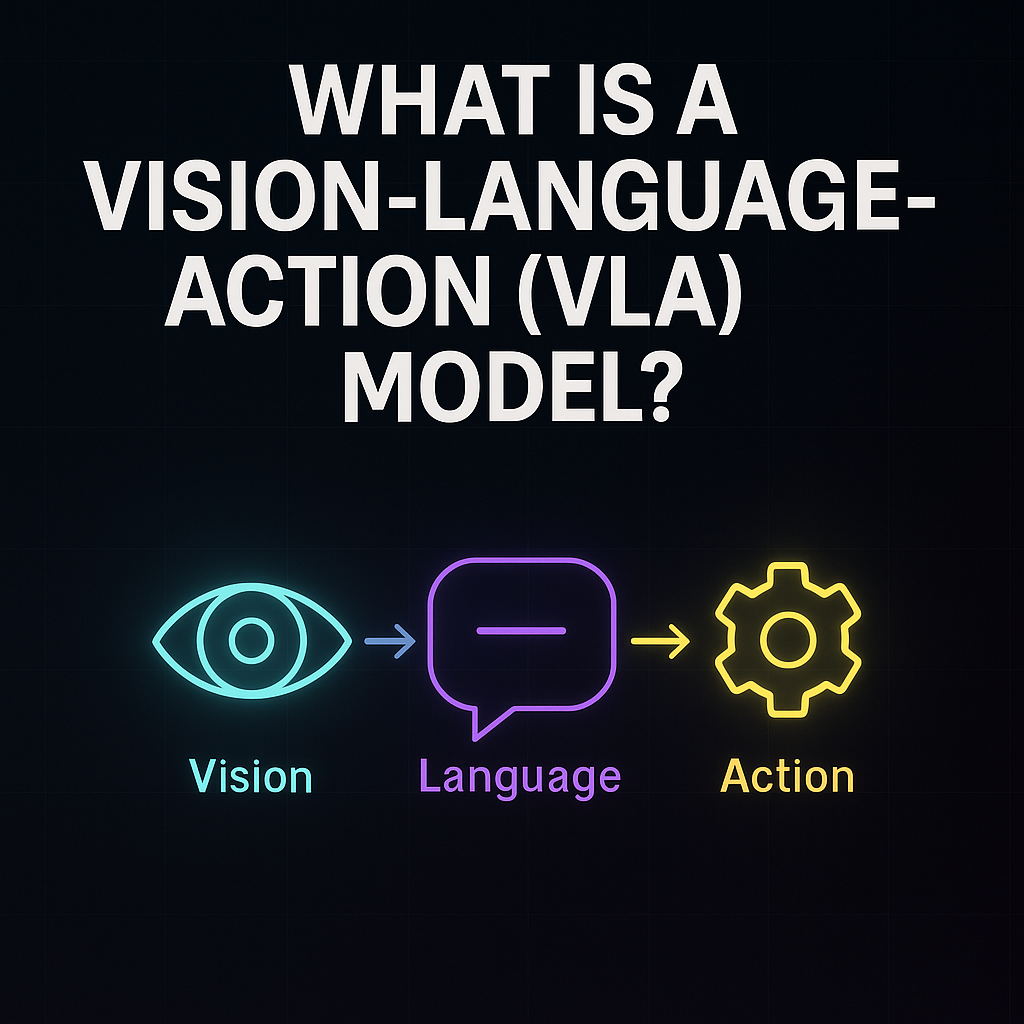
Foundational brains are Vision-Language-Action (VLA) models that fuse perception, language grounding, and action primitives. VLAs serve as the core intelligence within the Embodied AI Robotics Ecosystem, providing scene understanding, instruction parsing, and intent prediction that downstream systems query in real time. This centralization reduces brittle pipelines and simplifies multimodal policy handoffs across the entire stack.
Large Behavior Models: LBMs Driving the Ecosystem Forward
Large Behavior Models (LBMs) specialize in temporal decision-making and multi-step task sequencing for robots. Unlike text or image models that predict tokens or pixels, LBMs within the Embodied AI Robotics Ecosystem predict action trajectories, affordances, and adaptive strategies learned from human demonstrations and synthetic play. LBMs bridge high-level VLA intent to low-level controllers with behavior priors and safety constraints baked in.
Computational Infrastructure: Edge Chips Powering the Ecosystem
The computational spine of the Embodied AI Robotics Ecosystem relies on specialized edge AI chips, heterogeneous NPUs, and deterministic runtimes. Robotic workloads demand predictable inference with hard latency bounds, not just high throughput. New mixed-precision NPUs, embedded DSPs, and compiler co-optimizations deliver real-time performance within tight thermal budgets, meeting the strict latency requirements robots need for safe operation.
Simulation Platforms: Training Pipelines for the Ecosystem
High-fidelity simulators remain essential for scaling training data safely and economically within the Embodied AI Robotics Ecosystem. Modern sim stacks include physics engines with tactile contact models, photorealistic rendering for domain randomization, and human-in-the-loop correction workflows. Organizations combine massive sim-generated datasets with sparse real-world fine-tuning to reduce sample complexity and accelerate deployment cycles across industrial and warehouse environments.
Humanoid hardware in 2026 emphasizes biomimetic kinematics, compliant actuators, and dense sensing—all integrated into the Embodied AI Robotics Ecosystem. Platforms use distributed proprioception, event-based vision, tactile skins, and embedded IMUs to feed VLA and LBM stacks. Actuators pair high torque-to-weight ratios with local control loops to enable safe, adaptive interaction with humans and unstructured objects on factory floors.
Sim-to-Real Gap: The Critical Bottleneck in the Ecosystem
The Sim-to-Real gap remains a persistent technical friction point within the Embodied AI Robotics Ecosystem. Simulators still struggle with accurate contact dynamics, deformable object behavior, and lighting/perception edge cases that occur in real factories and homes. Closing this gap demands hybrid solutions: richer sensor modalities, online domain adaptation, continual on-robot learning, and adversarial domain randomization to align simulated policies with real-world performance.
Edge AI Inference Bottleneck: Latency Challenges in the Ecosystem
The Edge AI inference bottleneck refers to latency ceilings that limit fluid interactions within the Embodied AI Robotics Ecosystem. For safe reactive control, closed-loop cycles need sub-50ms latency; many deployed stacks remain in the 50–100ms window. Causes include large model sizes, memory bandwidth constraints, and task scheduling overhead. Remedies include model sparsity and distillation, operator fusion, runtime predictability tuning, and hardware-software co-design aimed at worst-case latency instead of average throughput.
Commercial Dynamics: Mandates and Deployments Across the Ecosystem
Commercial dynamics in 2026 are defined by national safety mandates, auditability requirements, and sector-specific procurement programs accelerating the Embodied AI Robotics Ecosystem adoption. Warehouses, assembly lines, and logistics hubs now host mixed fleets of humanoids and mobile manipulators operating 24/7. Investors favor vertically integrated stacks while standards bodies push for reproducible benchmarks and explainable behavior. Adoption hinges on demonstrable ROI, regulatory compliance, and operational reliability in real industrial settings.
Looking Ahead: The Future of Human-Robot Coexistence
Looking ahead, the next phase focuses on resilient edge intelligence, certified control stacks, and socially aware behavior models across the Embodied AI Robotics Ecosystem. LBMs will integrate more tightly with VLA brains, and real-time inference architectures will mature to meet consistent sub-50ms goals. As robots move from novel demonstrations to everyday operations, interdisciplinary engineering, robust standards, and continuous field learning will determine safety, utility, and public acceptance in the coming decade.