

China 295 billion AI plan: Bold Move to Rival US
The global technology race has reached a critical turning point as Beijing unveils its most ambitious digital infrastructure initiative to date. Through a massive financial commitment, the Chinese government is mobilizing trillions of yuan to fundamentally reshape its artificial intelligence ecosystem. This strategic blueprint marks a decisive shift away from foreign technology dependencies, signaling a new era of absolute digital sovereignty. By accelerating state-backed funding, the country is rapidly building the foundational architecture required to dominate the global technology landscape using the newly established China 295 billion AI plan.
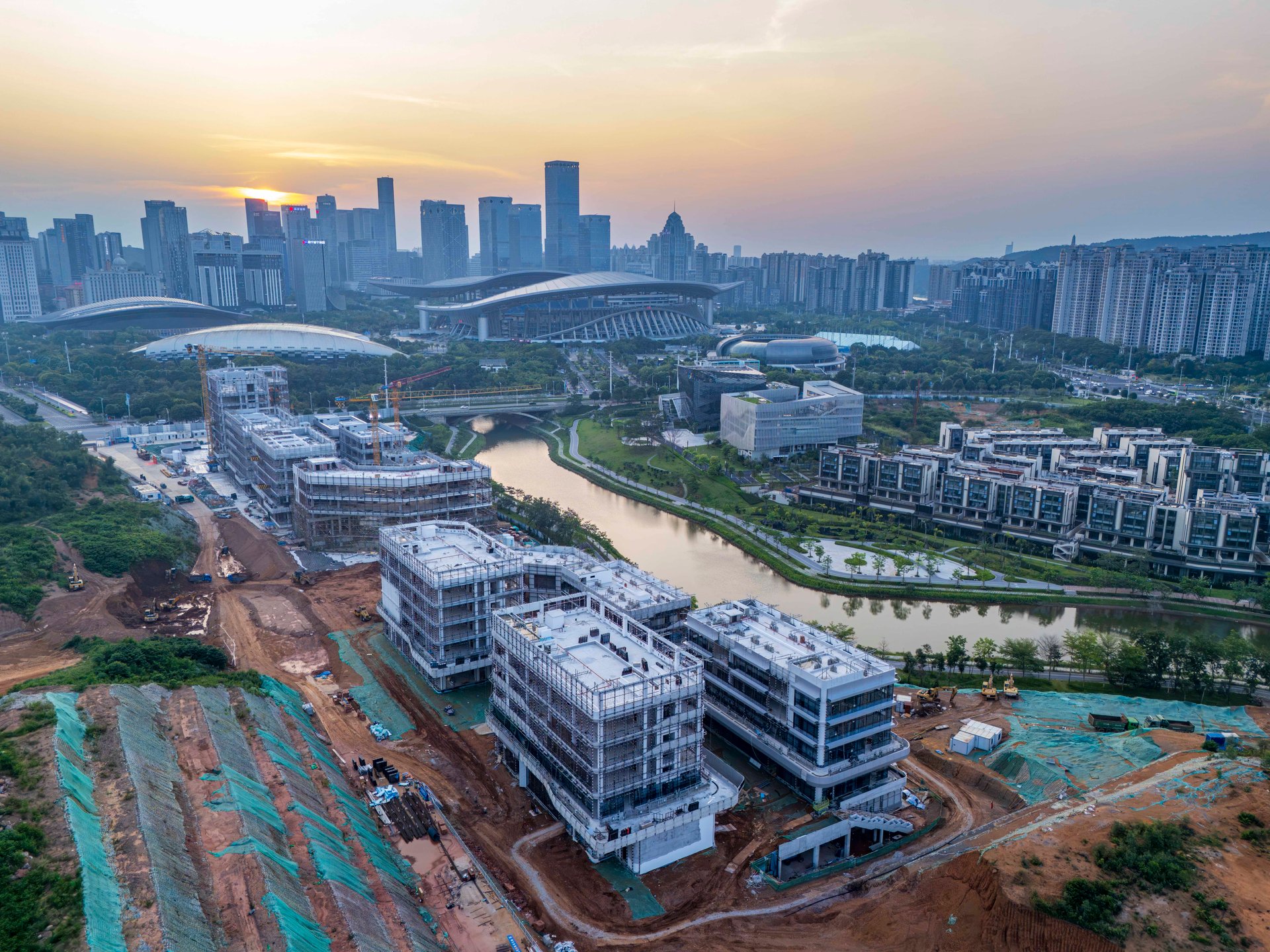
The Scale of China’s Massive Tech Stimulus
Beijing has officially launched the China 295 billion AI plan, a monumental 2 trillion yuan state-directed initiative designed to overhaul the nation’s computing power. This unprecedented capital injection represents a highly coordinated effort between central authorities, state-owned enterprises, and private tech giants. The funding will flow directly into advanced hardware manufacturing, localized software frameworks, and massive infrastructure projects. By pouring these immense resources into strategic sectors, the government aims to insulate its domestic economy from foreign sanctions while ensuring long-term technological self-reliance.

A Strategic Move to Counter Washington
This aggressive strategy serves as a direct response to tightening Western export restrictions on advanced semiconductors. The comprehensive China AI infrastructure plan aims to neutralize these geopolitical pressures by establishing an entirely independent supply chain. Beijing recognizes that computing power is the primary currency of modern geopolitical influence, making state-funded technological autonomy an absolute necessity. By securing its own supply of computational infrastructure through the China 295 billion AI plan, China is moving to insulate its domestic AI ecosystem from future trade embargoes and foreign policy shifts.

Accelerating the China vs US AI Race
The massive capital deployment intensifies the ongoing China vs US AI race, shifting the battleground from theoretical software models to physical infrastructure. For years, American firms have held a distinct advantage due to superior silicon designs and deep cloud ecosystems. However, Beijing’s new strategy focuses heavily on sheer engineering scale and rapid deployment to close this performance gap. By treating artificial intelligence infrastructure as a vital public utility under the China 295 billion AI plan, the government is creating a highly subsidized environment where domestic enterprises can scale rapidly without traditional market risks.
The Five-Year Timeline for Nationwide Data Centers
A core pillar of the initiative is a strict five-year timeline dedicated to building a hyper-connected network of national data centers. This ambitious expansion of China data centers AI infrastructure will establish standardized computing hubs across the country’s western and eastern provinces. By optimizing data distribution and energy consumption, these facilities will provide the massive computational throughput needed to train next-generation large language models. The synchronized rollout ensures that both private enterprises and state research institutes will have immediate access to low-cost, high-performance computing power by 2031.
Locking Out Nvidia and Advanced Foreign Hardware
To ensure absolute self-sufficiency, the new policy mandates a strict pivot away from Western semiconductor giants like Nvidia and AMD. Beijing is enforcing guidelines that explicitly favor domestic silicon, systematically restricting foreign manufacturers from participating in state-funded projects. This deliberate market exclusion creates a protected environment, forcing local tech firms to adapt to domestic alternatives. By cutting off access to mainstream global hardware, the policy ensures that every yuan spent under the China 295 billion AI plan directly benefits local component manufacturers and engineering firms.
Placing Bets on Huawei AI Chips
With American hardware excluded, the responsibility of powering this national network falls squarely on Huawei AI chips and local semiconductor design firms. The tech giant’s Ascend processors have become the central focal point of the nation’s hardware strategy, receiving massive state support to scale up production. While these domestic processors have historically faced manufacturing and software compatibility hurdles, the sheer volume of state orders is forcing rapid optimization. This guaranteed demand allows local engineers to iterate quickly, closing the hardware performance gap with Western rivals through continuous, real-world deployment.
Mandatory Shifts to Domestic Tech Suppliers
The initiative goes beyond mere financial incentives by introducing strict quotas that require data center operators to buy at least 80% of their hardware from domestic suppliers. This aggressive mandate completely alters the procurement landscape for local cloud providers and telecommunications companies. Tech firms can no longer rely on familiar Western components, creating an immediate and massive market for local hardware alternatives. This forced transition ensures that the entire supply chain—from motherboards to cooling systems—is manufactured within borders, shielding the industry from external disruptions.
Overcoming Deep Semiconductor Manufacturing Hurdles
Despite the enormous financial backing of the China 295 billion AI plan, local manufacturers still face severe technological bottlenecks, particularly in advanced lithography and precision manufacturing. Denied access to cutting-edge international fabrication equipment, domestic foundries must rely on older, less efficient manufacturing nodes. To overcome these physical limitations, local engineers are focusing heavily on advanced packaging techniques, software optimization, and massive cluster architectures. By linking multiple lower-tier chips together efficiently, they are successfully building powerful computing systems that mimic the performance of restricted Western hardware.
Transforming the Global Semiconductor Market
This massive internal pivot is triggering significant ripple effects across the global semiconductor market, permanently altering traditional tech trade routes. As Chinese corporations completely halt their purchases of Western silicon, major international tech firms are losing access to one of their largest historical revenue streams. This abrupt drop in demand is forcing global chipmakers to diversify their customer bases and adjust their long-term growth projections. Meanwhile, the massive scale of Chinese manufacturing is driving down the production costs of older-generation hardware, creating intense competition in developing tech markets.
A New Architectural Blueprint for Global Tech
The massive China AI investment 2026 initiative is ultimately creating a completely bifurcated global tech ecosystem, forcing a hard split in software and hardware standards. The world is moving toward two distinct digital environments: one built on Western frameworks and silicon, and another powered entirely by Chinese architecture. This division means global software developers and enterprise businesses will soon have to optimize their platforms for two completely incompatible hardware ecosystems. This structural shift will complicate international tech collaboration, rewrite cybersecurity protocols, and alter data sovereignty laws for decades to come.