

OpenAI may be preparing to buy artificial intelligence chips from Google as it looks for more ways to power its growing AI services. The reported move could help the company expand its computing resources and reduce its dependence on Nvidia, a major supplier of chips used to train and run advanced AI models.
The potential deal also highlights Google’s growing role in the AI hardware market. Its Tensor Processing Units (TPUs) offer another option for companies that need large amounts of computing power.
Although the reported purchase has not been confirmed by either company, it could mark an important development in the competition for AI infrastructure.
Why Is OpenAI Looking at Google AI Chips?
OpenAI relies heavily on powerful computer chips to develop its AI models and operate services such as ChatGPT. These systems require significant computing resources, especially as more people and businesses use AI tools.

Nvidia has been a major supplier of this hardware. However, relying on a single chip provider can create challenges involving supply, cost and long-term planning.
Google’s TPUs could give OpenAI another option. By exploring different types of AI hardware, the company may be able to expand its computing capacity and make its infrastructure more flexible.
The reported plan reflects a wider change across the technology industry, where companies are looking beyond traditional hardware choices to meet growing AI demand.
What Are Google’s Tensor Processing Units (TPUs)?
Google’s Tensor Processing Units are specialised processors designed to handle machine learning tasks. They are built to perform many of the mathematical operations required by AI systems.
Unlike general-purpose processors, TPUs are designed with AI workloads in mind. They can support tasks such as training machine learning models and running trained models to generate results.
Google has developed and used these chips within its own technology infrastructure for years. It has also made TPU computing available to outside customers through Google Cloud and has started expanding direct sales to selected customers.
For businesses working with large AI models, TPUs provide an alternative to Nvidia’s graphics processing units (GPUs). The best choice depends on the workload, software support, availability and overall cost.
7 Powerful Reasons Google AI Chips Could Matter to OpenAI
1. Less Dependence on Nvidia
One of the main reasons to consider another chip provider is to avoid depending too heavily on a single supplier.
Nvidia remains an important part of OpenAI’s computing infrastructure. Adding Google TPUs could give OpenAI more flexibility when planning future AI projects.
This would not necessarily mean leaving Nvidia behind. Instead, using different hardware platforms could help the company manage its computing needs more effectively.
2. More Computing Capacity for AI Models
Developing and operating advanced AI models requires substantial computing power. As AI services grow, companies need enough hardware to train models, process requests and support new features.
Google TPUs could provide OpenAI with an additional source of computing resources if a purchase or related arrangement moves forward.
More available computing capacity could help support future development. However, the actual benefit would depend on the number of chips acquired and how well they perform on OpenAI’s workloads.
3. Potential Savings on AI Infrastructure
AI infrastructure can be expensive. Companies must pay for hardware, electricity, data centres, networking and ongoing maintenance.
Google’s TPUs may offer competitive costs for certain workloads. If OpenAI can run suitable tasks on them efficiently, the company could have more options for managing its infrastructure spending.
However, lower costs are not guaranteed. The total expense depends on hardware prices, operating costs, software optimisation and the amount of work each system can complete.
4. Greater Flexibility in Hardware Choices
Different AI chips have different strengths. Some systems may work better for particular models or computing tasks than others.
Using both TPUs and GPUs could allow OpenAI to select hardware according to the needs of each workload. This approach could also reduce the risk of depending entirely on one hardware platform.
That flexibility may become increasingly valuable as AI models grow more complex and demand for computing resources continues to rise.
5. Stronger Competition in the AI Chip Market
Nvidia has a leading position in the market for AI computing hardware. Google’s efforts to expand its TPU business provide customers with another option.
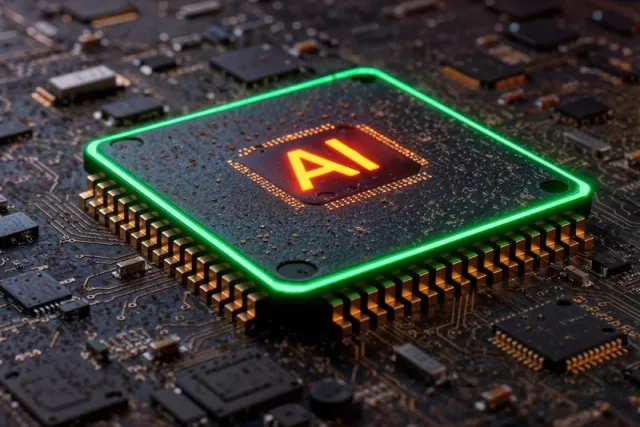
If major AI companies adopt a wider range of chips, hardware providers may face greater pressure to improve performance, software compatibility and pricing.
More competition could benefit businesses that need AI infrastructure. Still, the impact will depend on how widely alternative chips are adopted and how well they perform in real-world applications.
6. Better Preparation for Future AI Growth
AI companies need to plan for future demand, not just their current workloads. New products and more advanced models can require additional computing resources.
Exploring Google’s hardware could help OpenAI prepare for that growth. A broader infrastructure strategy may make it easier to expand capacity as requirements change.
The reported interest in TPUs also comes alongside OpenAI’s work on other infrastructure options, including its own chip development efforts. Together, these activities point towards a more diverse approach to computing.
7. A New Business Opportunity for Google
A potential purchase could also benefit Google. Selling specialised AI hardware to outside customers would expand the role of its TPU business beyond Google’s own services.
Demand from external companies could help Google establish TPUs as a stronger alternative in the AI infrastructure market.
The opportunity is particularly significant because OpenAI competes with Google in AI products. A commercial relationship involving hardware would show how companies can compete in one area while doing business together in another.
Google TPUs vs Nvidia GPUs: What Is the Difference?
Google TPUs and Nvidia GPUs can both support demanding AI workloads, but they are not identical.
| Feature | Google TPUs | Nvidia GPUs |
|---|---|---|
| Main purpose | Specialised machine learning computing | Graphics processing and a wide range of AI and computing tasks |
| AI applications | Training and running AI models | Training and running AI models |
| Software ecosystem | Google’s TPU tools and supported frameworks | CUDA and a broad range of AI software tools |
| Main advantage | Can be efficient for suitable workloads | Broad adoption and extensive software support |
| Best choice | Depends on model compatibility and workload | Depends on model compatibility and workload |
Neither option is automatically better for every AI project. Performance depends on the specific chip generation, model design, software, memory requirements and operating costs.
For OpenAI, the key question is whether Google’s hardware can deliver the required performance and value for its particular AI workloads.
Has OpenAI Confirmed the Google AI Chip Purchase?
As of October 28, 2026, the reported plan to purchase Google’s AI chips has not been publicly confirmed by either company.
The proposed purchase details remain unclear. Public information does not establish the number of chips involved, the financial value of the deal or when the hardware might be delivered.
OpenAI’s reported engineering recruitment for TPU optimisation suggests that adapting its models to Google’s architecture is an area of technical interest. However, preparing software for a type of chip does not, by itself, confirm that a purchase has been completed.
OpenAI has also been expanding its relationship with Google Cloud. The companies announced plans in October 2026 to make OpenAI’s advanced models and Codex workflows available through Google Cloud. This is a separate development from the reported chip purchase.
These developments show that the relationship between AI software, cloud computing and hardware is becoming more interconnected.
What Could This Mean for Nvidia?
The potential move could introduce another important customer opportunity for Google’s TPU business, but it does not mean Nvidia is about to lose its position in the AI market.

Nvidia’s GPUs remain widely used for AI training and inference. Its hardware and software ecosystem are established across many companies and research projects.
If OpenAI adopts Google TPUs alongside Nvidia GPUs, it could demonstrate that major AI developers are willing to use multiple hardware platforms rather than rely on a single provider.
For Nvidia, the development may increase competitive pressure. For the wider industry, it could encourage more investment in alternative chips and AI computing systems.
The longer-term effect will depend on actual adoption, performance and cost rather than the reported purchase plan alone.
Final Thoughts
OpenAI’s reported interest in Google’s AI chips highlights the growing need for flexible and reliable computing infrastructure. Google TPUs could offer another way to support AI model development while giving OpenAI more choices beyond Nvidia’s hardware.
For Google, a potential deal could strengthen its position in the market for specialised AI processors. For the wider industry, it reflects a growing effort to expand hardware options as AI demand increases.
However, the purchase remains unconfirmed, and its financial terms and technical details are not publicly known. Whether it becomes a major shift in OpenAI’s infrastructure strategy will depend on what the companies do next.